
Ending Depression Naturally
Sustained Long-Term Relief with No Side Effects
If you’ve tried antidepressants without success, you’re not alone. Over 30% of people with depression suffer from Medication-Resistant Depression (TRD)—where traditional medications either stop working, never worked, or come with unbearable side effects.
But now, a revolutionary non-medication treatment is offering new hope.
Stop struggling. Start healing.


Why Medications Fail: The Truth About Antidepressants
Are you still relying on medication for depression? You might be surprised to learn that science doesn’t back it up.
A groundbreaking STAR*D clinical trial conducted across 14 major medical centers over four years and involving 4,000 patients investigated the effectiveness of:
In NO instance did they achieve a remission rate higher than 28%.
Now, compare that to recent published studies from Stanford University, achieving an 84% remission rate using Personalized TMS (pTMS).
Stop treating the symptoms. Start healing the brain.
Breakthrough Depression Treatments at Brain Wellness Center
We offer science-backed, non-medication treatments that restore mood, energy, and emotional stability by addressing the neurological root causes of depression.
Our advanced, drug-free treatments provide a natural way to heal from depression without relying on medications.
You don’t have to feel stuck—our treatments help your brain retrain for emotional balance and resilience.

A Data-Driven Approach to Identifying Mood-Related Brain Patterns
qEEG Brain Mapping – Understanding Depression’s Impact on the Brain
qEEG (Quantitative Electroencephalography) is an advanced brain imaging tool that measures electrical activity in the brain, pinpointing the neurological imbalances linked to depression, anxiety, and emotional dysregulation.
How Does qEEG Help?
qEEG Brain Mapping is the first step toward a customized, effective depression recovery plan.


Gently Stimulating Brain Function to Lift Depression Naturally
qpTMS™ (Quantum Phased Targeted Magnetic Stimulation) – Restoring Emotional Balance
qpTMS™ is an advanced, personalized form of transcranial magnetic stimulation (TMS) designed to restore brain activity, neurotransmitter balance, and emotional regulation in individuals suffering from depression.
How Does qpTMS™ Work?
Most patients feel significant improvement within weeks—without medications.
Helping Your Brain Reset and Regain Control Over Mood
Neurofeedback – Training the Brain for Emotional Stability
Neurofeedback is a non-invasive brain training method that helps regulate brainwave activity associated with emotional regulation and stress management. Many individuals with depression experience:
How Does Neurofeedback Help?
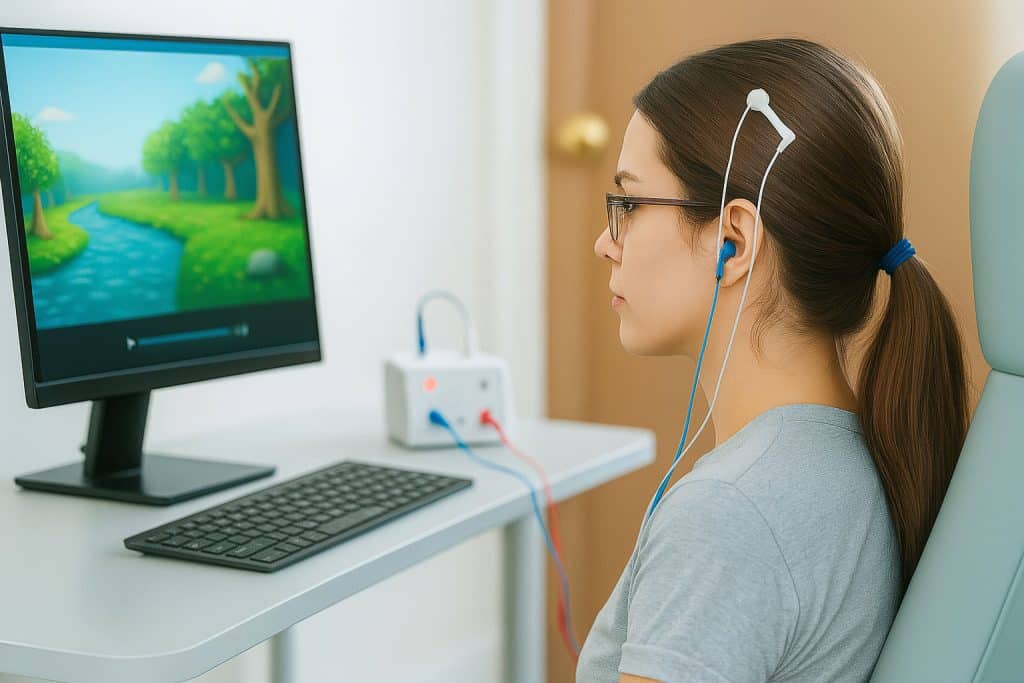
Neurofeedback Can Be Done at Home Under Our Supervision
We offer remote neurofeedback training, allowing individuals to train their brains from home while still receiving professional guidance.

Using Light Therapy to Restore Mood & Reduce Anxiety Naturally
Passive Near-Infrared Light Treatment (PnIR) – Supporting Brain Healing & Emotional Stability
Near-Infrared Light Therapy (PnIR) is a breakthrough treatment that delivers targeted 810nm wavelength light energy to stimulate brain healing, balance neurotransmitters, and reduce stress-related inflammation—key factors in recovering from depression.
How Does PnIR Work?
PnIR Can Be Done at Home Under Our Supervision
For individuals who struggle with low energy and motivation, PnIR can be administered from the comfort of home with expert guidance.

Why Choose Brain Wellness Center for Depression Treatment?
What Sets Us Apart?
At Brain Wellness Center, we specialize in science-backed, drug-free treatments that help individuals restore emotional stability naturally.
Our treatments are designed to enhance emotional well-being, improve stress resilience, and support long-term mental health.
Frequently Asked Questions
- Depression
- Depression Insurance
- Diagnosis and Assessment – Depression
- Equipment and Technology - Depression
- Neurofeedback and Brain Training - Depression
- qpTMS™ Treatment - Depression
Currently, most insurance providers only cover TMS for individuals aged 18 and older. Some may consider patients as young as 15. Brain Wellness Center can explore options based on your child’s needs.
MDD is diagnosed based on symptoms such as sadness, loss of interest, low energy, and sleep changes. Insurance typically requires a score of 20+ on the PHQ-9 form to authorize treatment. Brain Wellness Center offers this screening during your consultation.
Insurance generally covers one session per day, five days a week, for a total of 36 sessions over about seven and a half weeks. This protocol is followed at Brain Wellness Center.
Yes. Brain Wellness Center offers a free consultation where a doctor will review your case. We also verify your insurance and send detailed benefits and copay information by text.
No. Brain Wellness Center handles all insurance communications and prior authorizations for you, making the process smooth and stress-free.
Yes. Many patients choose to speed up their recovery by self-paying for extra sessions while insurance covers one per day. Brain Wellness Center supports flexible scheduling to meet your goals.
Once all paperwork is completed, Brain Wellness Center typically secures insurance authorization within 2 to 5 business days.
MDD is diagnosed based on symptoms such as sadness, loss of interest, low energy, and sleep changes. Insurance typically requires a score of 20+ on the PHQ-9 form to authorize treatment. Brain Wellness Center offers this screening during your consultation.
Insurance generally covers one session per day, five days a week, for a total of 36 sessions over about seven and a half weeks. This protocol is followed at Brain Wellness Center.
Yes. Brain Wellness Center offers a free consultation where a doctor will review your case. We also verify your insurance and send detailed benefits and copay information by text.
No. Brain Wellness Center handles all insurance communications and prior authorizations for you, making the process smooth and stress-free.
Currently, most insurance providers only cover TMS for individuals aged 18 and older. Some may consider patients as young as 15. Brain Wellness Center can explore options based on your child’s needs.
Yes. Many patients choose to speed up their recovery by self-paying for extra sessions while insurance covers one per day. Brain Wellness Center supports flexible scheduling to meet your goals.
Once all paperwork is completed, Brain Wellness Center typically secures insurance authorization within 2 to 5 business days.
Pricing depends on your treatment plan. Please contact Brain Wellness Center for current self-pay rates and available financing options.
Yes. Brain Wellness Center accepts all major credit cards for your convenience.
Yes. Payments can be made using HSA or FSA cards at Brain Wellness Center.
No. We recommend keeping medications stable during TMS so we can accurately assess how well the treatment is working. Any changes should be discussed with our clinical team.
Yes. TMS therapy is a covered treatment under many Evernorth plans for patients with MDD. We’ll verify and authorize your coverage.
Yes. TMS for depression is covered under many Carelon plans. Brain Wellness Center takes care of the pre-authorization process.
Yes. Medi-Cal offers TMS coverage in many counties for depression. Availability can vary by region, and our staff will help check your eligibility.
Yes. Many County Health Plans include TMS for depression as a covered benefit. Brain Wellness Center works with several counties and will assist in verifying coverage.
Yes. Health Net provides TMS coverage for MDD with proper diagnosis and documentation. Our office manages the process on your behalf.
Yes. Beacon covers TMS for depression when clinical guidelines are met. Brain Wellness Center provides assistance with benefit verification.
Yes. Quantum includes TMS coverage for depression in most plans. Our team can check your eligibility.
Yes. MHN offers TMS coverage for Major Depressive Disorder. We handle verification and authorizations for you.
Yes. Many Covered California plans include TMS coverage for depression when clinical criteria are met. Brain Wellness Center will help verify your specific plan.
Yes. TriCare covers TMS for qualifying patients with depression. Brain Wellness Center is in-network and will coordinate your benefits.
Yes. TMS for depression is a covered benefit with Magellan for qualifying patients. Brain Wellness Center submits all necessary documentation.
Yes. Medicare covers TMS therapy for Major Depressive Disorder. Brain Wellness Center is an in-network provider and will manage the paperwork.
Yes. TMS is covered under many Value Options plans for depression. Brain Wellness Center can determine your specific plan details.
Yes. TriWest provides coverage for TMS treatment for MDD. We can assist with authorization and scheduling at Brain Wellness Center.
Yes. Cigna provides coverage for TMS therapy when treating MDD. Brain Wellness Center will verify and process your eligibility.
Yes. Aetna covers TMS for depression, subject to pre-authorization. Our team at Brain Wellness Center will guide you through the approval process.
Yes. Anthem covers TMS treatment for individuals diagnosed with Major Depressive Disorder. Brain Wellness Center handles all insurance authorizations.
Yes. Blue Shield covers TMS treatment for Major Depressive Disorder (MDD) when medically necessary and prior authorization is approved.
Yes. TMS for depression is covered by Blue Cross as a medically approved treatment for MDD, following standard clinical guidelines.
Yes. Quantum is accepted, and TMS for depression is typically a covered benefit.
Yes. Evernorth is an in-network provider, and TMS treatment for MDD is included under many of their plans.
Yes. Brain Wellness Center works with Carelon, and they cover TMS for depression in many cases.
Yes. Brain Wellness Center is in-network with Medi-Cal. TMS may be covered for MDD depending on your county and plan.
Yes. We partner with several County Health programs throughout California. TMS coverage for depression may vary by region but is available through many plans.
Yes. Brain Wellness Center accepts a variety of Covered California health plans. TMS for MDD is often covered with documentation of medical necessity.
Yes. Health Net plans generally include TMS coverage for depression, and Brain Wellness Center is in-network.
Yes. Beacon Health Options is accepted at Brain Wellness Center, and most Beacon plans cover TMS for Major Depressive Disorder.
Yes. Brain Wellness Center is in-network with TriCare. TMS is generally covered for Major Depressive Disorder.
Yes. We are in-network with MHN, and TMS for depression is included in many of their benefit plans.
Yes. TriWest covers TMS for depression, and Brain Wellness Center is an in-network provider.
Yes. Medicare patients are eligible for TMS treatment for depression, and we are fully in-network.
Yes. Brain Wellness Center accepts Value Options, and TMS is a covered treatment for MDD under most plans.
Yes. Brain Wellness Center is in-network with Aetna. Coverage for TMS in depression cases is available upon prior authorization.
Yes. Magellan is an accepted provider at Brain Wellness Center. They cover TMS for MDD in most plans.
Yes. Cigna is an in-network provider, and they do cover TMS for depression when medically necessary.
Yes. Brain Wellness Center is an in-network provider for Blue Shield, and TMS is covered when treating MDD.
Yes. Brain Wellness Center is in-network with Blue Cross. TMS for depression is typically covered.
Yes. We are in-network with Anthem, which includes coverage for TMS treatment for Major Depressive Disorder.
Yes. Brain Wellness Center is in-network with most major commercial insurance providers in California. TMS for Major Depressive Disorder (MDD) is a covered benefit under many of these plans.
Many experience fatigue or sadness without realizing it may be depression. We offer comprehensive evaluations to help identify root causes and recommend personalized care. Early support is key to recovery.
MeRT is a trademark—like “Big Mac.” Both use FDA-cleared devices, but our qpTMS™ involves more sophisticated brain mapping (qEEG) and fully customized treatment settings, offering unmatched precision.
While we don’t label it as “pTMS,” our proprietary qpTMS™ protocol is even more personalized than typical pTMS models.
pTMS means “personalized TMS.” Our qpTMS™ goes further by using brainwave data (qEEG) to calibrate location, frequency, and intensity—exclusively available at Brain Wellness Center.
No. MeRT is not a distinct procedure but a branded interpretation of standard TMS. Brain Wellness Center uses more advanced and flexible protocols for depression.
TMS is the general term. rTMS means “repetitive TMS”—multiple magnetic pulses per session. All FDA-approved treatments use rTMS, including those at Brain Wellness Center.
Yes. Theta Burst is a rapid, shorter protocol shown to be effective in depression. Brain Wellness Center offers it when clinically appropriate.
Yes. All our depression treatments are based on repetitive TMS (rTMS), the standard FDA-approved method.
Yes. Brain Wellness Center has CloudTMS on-site, though it is used infrequently.
Yes. MagVenture is our main platform at Brain Wellness Center. It’s FDA-cleared, supports advanced protocols like theta burst, and delivers consistently effective results.
Yes. We have a Nexstim device, but it is rarely used. Nexstim requires an MRI-based setup, while our preferred method uses qEEG for precise and more accessible targeting.
Dr. Hashemian trained with Magstim in 2003. Although it is no longer our primary system, some devices in our clinic are powered by Magstim technology.
Yes. Deep TMS refers to BrainsWay’s H-coil technology, which is still available. However, our MagVenture protocols offer equal or better results for depression treatment.
Yes, BrainsWay is available, but rarely used now. We’ve transitioned to newer, more precise technologies for treating depression.
NeuroStar was used when it was first FDA-approved in 2008. It was phased out in 2013 in favor of more advanced systems at Brain Wellness Center.
Brain Wellness Center primarily uses MagVenture, an FDA-cleared TMS system also used by leading institutions like Stanford and Harvard.
MDD is diagnosed by symptoms such as sadness, loss of interest, low energy, and sleep changes. Insurance typically requires a PHQ-9 score of 20+ for coverage.
Some doctors do this to get coverage for alternative meds. We prioritize accurate diagnosis.
No. You can begin after our in-house evaluation.
He uses a steady, customized pace for long-term relief, based on 20+ years of experience.
Usually only for ages 18+, sometimes as young as 15. Contact us for case evaluation.
Yes. TMS involves no sedation or downtime.
No. You can resume normal activities immediately.
Yes. Many do 1 covered + additional self-pay sessions.
Typically under 20 minutes.
Yes, but extra sessions are self-pay.
We offer up to 5/day. More than 1/day isn’t covered by insurance.
Yes. Up to 5/day is available; only 1/day is covered by insurance.
Yes. It’s safe and effective when clinically appropriate.
Maybe. Some benefit during stress or symptom return—decided case by case.
With care, effects can last months to years.
Contact us for self-pay rates and financing options.
Yes. All major credit cards are accepted.
Yes. Payments via HSA/FSA are accepted.
No. A typical course is 6–8 weeks. Maintenance is optional.
No. Keep meds stable during treatment; any changes should be discussed with our team.
Better sleep, improved mood, less anxiety, and higher quality of life.
Many enjoy long-term relief with proper maintenance and lifestyle support.
Yes. Non-medication-based care is our specialty, though we coordinate with prescribers when needed.
While not always curable, it is highly manageable. Brain Wellness Center helps patients achieve long-term relief.
Through qEEG brain mapping, evaluations, and symptom tracking, with plans that may include qpTMS™, neurofeedback, and PnIR.
Sessions last 20–30 minutes and are done 3–5 times a week, customized to your needs.
PnIR uses 810nm near-infrared light to stimulate brain function, reduce inflammation, and promote healing.
It supports neurotransmitter function, increases blood flow, and enhances mood regulation.
Yes. It’s FDA-cleared, painless, and non-invasive.
Yes. Home-use devices are available with clinical supervision.
Many notice improvements after 20–30 sessions. Progress is tracked and plans are adjusted accordingly.
It helps regulate mood, reduce sadness and fatigue, and boost stress resilience—enhancing emotional and cognitive performance.
Yes. It’s non-invasive, has no long-term side effects, and is drug-free.
Yes. Brain Wellness Center offers home-based programs supervised remotely by clinicians.
Neurofeedback is a non-invasive technique that trains the brain to self-regulate by using real-time feedback on brain wave activity. Brain Wellness Center uses it to improve focus, emotional balance, and mental clarity—especially in individuals with depression.
Yes. qpTMS™ is especially helpful for individuals who haven’t responded well to antidepressants or talk therapy. It targets brain regions involved in emotional regulation and can restore function where traditional methods fall short.
Yes. TMS is covered by most major insurance plans when treating Major Depressive Disorder. Brain Wellness Center will help verify your benefits and handle all the necessary paperwork to ensure coverage for eligible patients.
Yes. Many patients benefit from combining qpTMS™ with qEEG, neurofeedback, or Passive Near-Infrared Light Therapy (PnIR)—all available at Brain Wellness Center. This integrative approach supports more comprehensive recovery.
Most patients complete 30–40 sessions over 6 to 8 weeks. The exact number depends on your symptoms and response to treatment. We’ll customize your plan based on your progress and needs.
Some patients notice mood improvement in 2–3 weeks, while others take longer. Progress is monitored throughout your course of qpTMS™ to ensure lasting relief from depression.
Yes. TMS is non-invasive and well-tolerated. Mild headaches are reported in about 5% of patients, and serious side effects are extremely rare. At Brain Wellness Center, we prioritize your safety with every session.
While standard TMS follows a “one-size-fits-all” protocol, qpTMS™ is customized based on your unique brainwave patterns. We adjust coil placement, pulse frequency, intensity, and timing to target your specific areas of dysfunction—enhancing treatment effectiveness for depression.
No. MeRT is a trademarked variation of TMS. While both use FDA-approved equipment, Brain Wellness Center’s qpTMS™ goes further by using comprehensive qEEG brain mapping and proprietary algorithms for a more advanced and individualized approach to treating depression.
Yes. qpTMS™ uses FDA-cleared equipment approved for treating Major Depressive Disorder. Brain Wellness Center complies with all FDA safety and treatment guidelines while offering a more customized experience than standard TMS.
qpTMS™ stands for Quantum Phased Targeted Magnetic Stimulation. It is a highly personalized form of transcranial magnetic stimulation (TMS), guided by qEEG brain mapping. This advanced treatment is exclusively offered at Brain Wellness Center to help relieve symptoms of depression.
Quantitative EEG (qEEG) measures your brainwave activity to identify patterns associated with depression, such as slowed frontal lobe activity. This data helps us create precise, effective treatment plans.
Yes. Depression-related brainwave patterns may still be present even when symptoms temporarily improve. qEEG helps uncover these hidden imbalances for consistent, long-term relief.
While these conditions can overlap, qEEG and neuropsychological testing at Brain Wellness Center help us pinpoint unique brain activity patterns for accurate diagnosis and targeted treatment.
Yes. It offers insight into how depression may affect attention, memory, processing speed, and emotional regulation. This helps tailor therapy to support full cognitive and emotional recovery.
Depression is diagnosed based on a clinical interview, symptom history, and standardized tools such as the PHQ-9 depression scale. Brain Wellness Center combines these with neurological assessments for deeper insight.
Absolutely. Depression affects people of all ages. Brain Wellness Center provides customized treatment plans for adolescents, adults, and older adults to help restore mental clarity and emotional wellness at every life stage.
No. While everyone feels sad occasionally, clinical depression is a persistent and disruptive condition that can interfere with work, relationships, and overall well-being. If sadness lingers or worsens, professional evaluation is recommended.
Yes. If untreated, depression may contribute to anxiety, substance use, sleep problems, and cognitive decline. Early treatment at Brain Wellness Center can help prevent these complications and promote long-term mental health.
Contact Brain Wellness Center for a consultation. Our team will assess your symptoms, discuss your history, and design a treatment plan tailored to your unique needs using the most advanced tools in mental health care.
Yes. Many patients respond well to non-pharmacological options such as qpTMS™, neurofeedback, and PnIR light therapy—all offered at Brain Wellness Center. We also collaborate with prescribers when medication is needed.
Without treatment, depression can last for weeks, months, or even years. At Brain Wellness Center, our goal is to help you feel better quickly and prevent future episodes with evidence-based therapies like TMS, neurofeedback, and lifestyle support.
Yes. Depression is linked to increased inflammation, weakened immune response, and heightened risk for chronic conditions such as heart disease and cognitive decline. Treating depression can improve both mental and physical health outcomes.
Depression, or Major Depressive Disorder (MDD), is a common and serious mood disorder that affects how you feel, think, and manage daily activities. At Brain Wellness Center, we offer personalized, non-drug treatments to help restore emotional balance and improve quality of life.
Depression can be caused by a combination of factors, including genetics, brain chemistry, medical conditions, trauma, or chronic stress. At Brain Wellness Center, we take a comprehensive approach to understanding and addressing the root causes of your symptoms.
Symptoms include persistent sadness, fatigue, loss of interest in activities, sleep disturbances, appetite changes, feelings of guilt or worthlessness, and difficulty concentrating. If these symptoms persist, Brain Wellness Center offers effective treatment options tailored to your needs.